

32·
2 days agoI dunno, my interest in this subject has been very high for years and years.
I dunno, my interest in this subject has been very high for years and years.
All caps or like a normal person?

It seems like there’s a market for a company that will buy Teslas ultra cheap, modifies them heavily, then rebadges them like Alpine does for Renault, AMG does / did for Mercedes, Abarth for Fiat, etc.
These days those are all subsidiaries of the main brand, and even before that they had a cooperative relationship with the main brand. But, I can imagine a setup where the main brand doesn’t support or approve of what the modifier company does.
Wonderful. DRAM and NAND flash companies are a cartel and are able to make their prices absurd by cutting supply when demand is high.
they’re reducing production in places.
Really? Where have you seen that reported?
So, maybe this will result in the companies that make SSDs ramping up production. Maybe once the bubble bursts there will be a huge glut of SSDs and so they’ll be cheap.
C’mon bubble, do your popping thing.
I hope datacenters are ordering pallets of 8 TB SSDs and are instead getting pallets with bricks on them.
They don’t support sending messages over a serial / USB / network connection to say “battery is almost dead, shut down cleanly while you can” right? As far as I can tell, that’s the one key feature that a UPS has that a portable battery doesn’t.
I took a look the other day and was amazed at how little UPSes have improved in the last few decades vs. everything else battery-related.
At this point, I’d expect a consumer-grade UPS to have something like a Raspberry PI attached, and run a web server. I’d expect it to not just have a serial port for signaling, but to be able to run custom BASH scripts to send messages out to any attached device warning it about being on battery and keeping it up to date on the battery status.
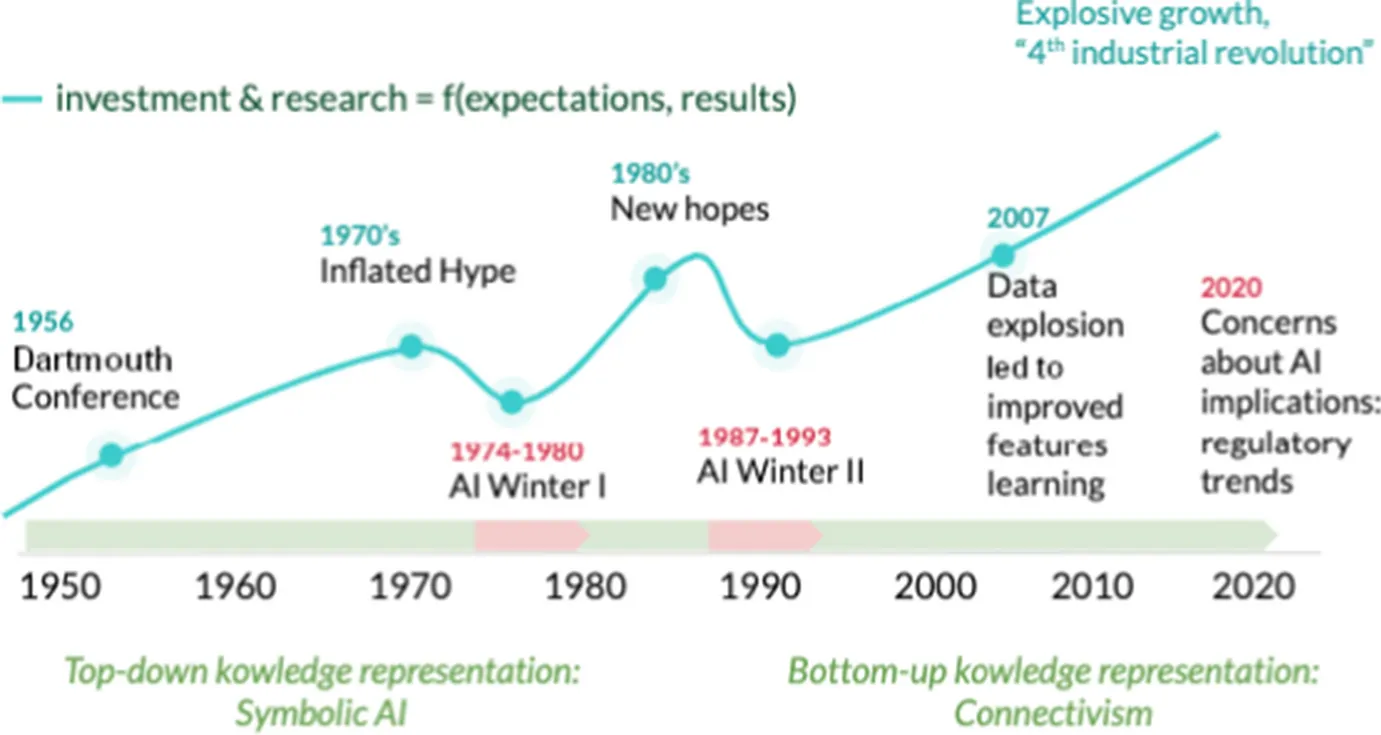
Some form of “AI” will always be around. It has been around nearly as long as we’ve had computers. We’ve even had AI chatbots since 1966.
But, the dot com bubble is a bad comparison. If you look at a graph of Internet users over time you can barely even see the dot com crash. The Internet was a massively useful phenomenon and more and more people kept using it. The dot com crash was basically an overestimation of how quickly people were going to adopt it combined with a massive drop in the value of Internet-based ads.
What’s much more likely with AI is another AI Winter where a few things stick around, but mostly AI goes back on the back burner for a few more decades.
This is somewhat of a bigger deal than others (like Noem) because Trump has known Bondi since at least 2013. Most of the other people in Trump’s orbit have only been “friends” since his first administration, but he has known her for much longer.
now prosecute her
You think that Trump’s new pick for the attorney general is going to prosecute the old attorney general?
Trump might not have much loyalty, but he’s not going to go after his own people like that. He knows if he does that, there’s a risk they’ll fully turn on him and spill all the secrets they know. If he just removes them from the spotlight and gives them a cushy job with no public exposure and no responsibility they’ll probably keep their mouths shut either out of loyalty or fear of what he might do to them otherwise.
Also, if there were a trial of Bondi, it wouldn’t be some satisfying thing where she actually takes responsibility for all the shit she did on behalf of Trump. There wouldn’t be any juicy revelations or exposure of her wrongdoing (or her coverups of his wrongdoing). Instead it would just be a show trial where the facts were whatever his team decided to make up.
Just look at what happens in other dictatorships when someone loses favour with the dictator. The result isn’t a fair trial where there’s an impartial hearing of the facts where the defence gets to use the discovery process to unearth and expose the previously secret communications. No, what happens is that the prosecutor rails against the defendant for all their failings, the defendant’s attorney offers only token resistance, and the judges go with the only outcome the dictator will accept. Normally it can be done in an afternoon.
I don’t think it’s an “obsession with cars” or that people are “ignoring” electrified rail.
The problem is that there are things that are in your direct control, like buying a car and using the roads which exist. Then, there are things outside your direct control, like trying to get your government to install electrified rail. Even if you have a really responsive government that isn’t captured by special interests, getting rail built and up and running can take a decade. And, if you need to get from A to B, you can’t wait for a decade. Even if you’re really pro-rail during that decade you still need to travel, so you’re likely to be forced into getting a car. Once you have a car, then rail might become less of a priority because you are now a car user. Maybe eventually you’ll still want to use the rail system, but for now you have a car, so your priorities are still going to include car priorities.
This all changes if you live somewhere where there’s already great rail service. In that case, you might already have rail available when you move somewhere and all you need to do is encourage your local government to keep funding rail and not subsidizing cars. At that point, the car driver demographic is small and easy to ignore.
The problem is in switching from one system to the other. You need a government that is going to weather the complaints from drivers for years while the rail infrastructure is being put in place until you get to a point where drivers can start selling their cars and switching to rail. That’s really hard to do though, because going from poor rail infrastructure to good rail infrastructure can take a decade, and politicians often have terms lasting only 4 years or so. That means that they have to take on the expense and pain of starting a rail project and then facing an election long before the system is up and running. It’s actually surprising how many politicians are willing to do that, given that it’s so hard on their political careers. It’s unsurprising that most of them don’t want to do it because it means getting re-elected is much more difficult than if they just stick with the status quo.
Meanwhile, the special interests like car companies, car dealerships, gas stations, etc. are all going to be lobbying against any rail projects. In North America it’s even harder because car companies are local, whereas the companies that make trains are mostly European. So, the car-related lobby can talk all about the impact on local jobs, whereas the rail lobby has to deal with the jobs mostly being in Europe. Even without that, it’s hard to change things because of the issue of diffuse costs and concentrated interests. Hundreds of thousands of commuters might benefit from a rail system, but it’s probably not their #1 priority, it’s something they care about, but at best it’s #4 or #5. Meanwhile for car companies, etc. it’s a top priority. While you might not want to go to every city council meeting where this is being discussed. It’s almost certain that the auto lobby will ensure their voice is heard because it’s at the top of their list.
In the end, it’s a lot more complex than just people being obsessed with cars, or ignoring light rail.
What’s funny is that when you’re doing something that you’ve done thousands of times, like driving a route that you know extremely well, you can sometimes have almost no memory of doing it. While you’re doing it you can be so zoned out that you’re not consciously aware of what you’re doing. So, in a sense you time travel at a rate of 1 second per second with your consciousness just getting a brief snooze.
It will slightly improve the chances. But, is that enough?
Imagine you had an intern working with you on a project. They didn’t know anything about SQL injection, cross site scripting, etc. You probably wouldn’t give them a task where that was a concern. If you did, you’d watch them like a hawk. Because they’re an intern, the amount of code they’d produce would probably be pretty low, and it would be pretty low-quality overall, so it would be easy to spot mistakes that would lead to these kinds of vulnerabilities.
An LLM has the understanding of the problem space that an intern does, but produces vast amounts of code extremely quickly. That code is designed to “blend in”, i.e. it’s specifically trained to look like good code, whether it is or not. Because of “vibe coding”, people trust it to do all kinds of things, including implement bits where there’s a danger of XSS or SQL injection. And the way Claude Code ensures it doesn’t generate those vulnerabilities is… someone says “hey, don’t do that, ok?”
Having that statement in there is better than not having it. But, it’s just a reminder that these things aren’t appropriate for writing production code. They don’t actually understand what XSS or SQL injection are, and they can’t learn. They don’t know why it’s important. They don’t have a technique for checking if their code actually has those vulnerabilities, other than passing it to themselves recursively and asking that other version of themselves to generate some text that might flag if those vulnerabilities were spotted. But, AIs are famously sycophantic so even recursively using itself, it will generate text to “please” itself and probably write something like “your code is great and I can’t spot any vulnerabilities at all! Congratulations! [Emoji] [Emoji] [Emoji]”
“I was with my boys one time and I was telling them I was gonna go to Waffle House and get Waffle House. And I ended up at a Waffle House – this was in Georgia and I end up at a Waffle House like 50 miles away from where I was,” Phillips said in a January 2025 podcast episode.

One quick question… was your car teleported to the Waffle House parking lot?
To me what’s wild about it is that it’s completely filled with houses, and the houses seem to all respect the orientation of the nearest street.
You’d think that they’d say “Ok, well in this section we have these two roads coming at a narrow angle, let’s just make this a park”, or something to make the places where the two grids join a little less ugly.
You guys
I’m not British.
If you read The Constitution of the Six Nations, you’ll see why I said they had a bit more influence than The Magna Carta, and Commonwealth Law
I don’t see that at all. This Constitution of the Six Nations has a lot of ceremony in it, but in terms of actual procedures it has things like:
When a unanimous decision shall have been reached by the two bodies of Fire Keepers, Adodarho shall notify Hononwiretonh of the fact when he shall confirm it. He shall refuse to confirm a decision if it is not unanimously agreed upon by both sides of the Fire Keepers
There’s nothing about the US system where unanimity is required.
Then there’s bits about inheriting rights to lordship, exactly the kinds of things the Americans were trying to get away from:
The right of bestowing the title shall be hereditary in the family of the females legally possessing the bunch of shell strings and the strings shall be the token that the females of the family have the proprietary right to the Lordship title for all time to come, subject to certain restrictions hereinafter mentioned.
Then there’s bits about how people need to inform the lords of their nation if they wish to emigrate. Or how they need to supply a string of shells if they want to be adopted into a clan.
Not sure what you’re seeing in there that had any influence on the US constitution or laws.
I’d argue that even though the Americans split from the British because of the power of the British king, in many ways the British system is the same as it was when the US first formed as a country. There’s still a king in charge, there’s still a house of commons, there’s still a house of lords, the courts work the same way. It’s just that gradually the king has receded from being a key decision-maker to a ceremonial figurehead.
Also, I think there’s a lot more in common between the British system and the American system than there is between the American system and any Native American system.
The British system has the House of Commons and the House of Lords. The American system has the same two bodies just renamed to the House of Representatives and Senate. They function in a very similar way to the British system. The British King had close advisors in a cabinet, so did the US president, they just use different terms: “minister” vs “secretary”. The king was the head of the armed forces, the president was commander in chief.
Even elections were effectively the same between Britain and its rebel colony. White men who owned property were allowed to vote, and the method of voting was similar.
I’m not sure where you get the idea it has something to do with how Native Americans did things.
Has it though? At the beginning the US was a loose confederation of states, each with a lot of power and a strong identity. These days the states are much weaker and a lot more authority is held by the mad king. Even if you ignore all the constitutional amendments, the US has changed its form of government a lot since the early days.

Musk is much more of an Edison than a Tesla. If he’d been honest he would have named his cars Edison. Then, the cool rebadge could have been Tesla. But, even he was smart enough to realize what an asshole Edison was, even if he didn’t recognize the Edison in himself.